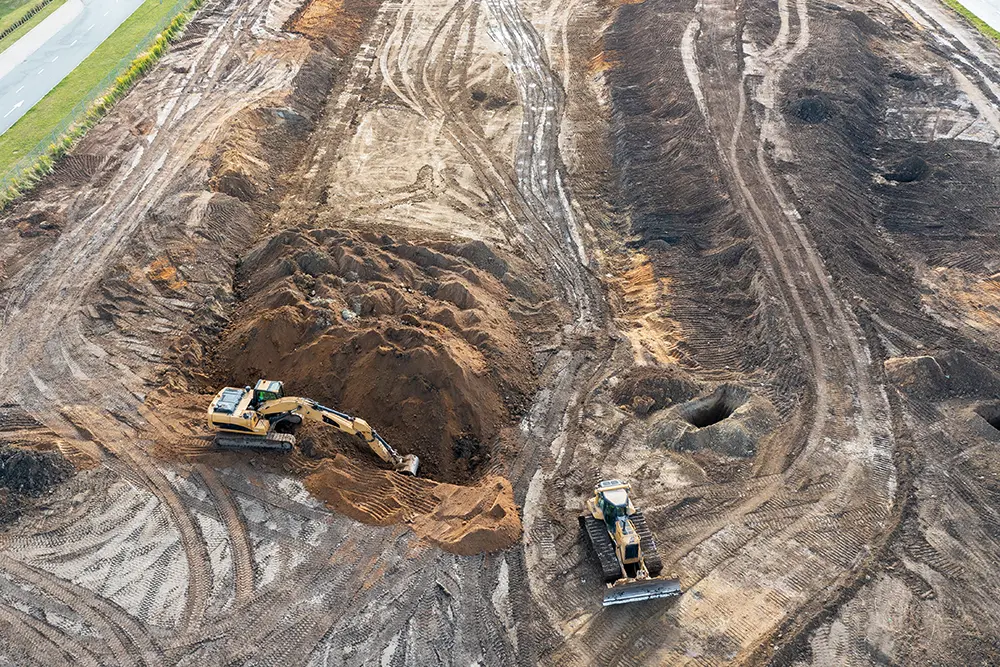
Excavators, mini excavators, backhoes, and other digging equipment are powerful machines that can move material quickly and easily. These machines can strike, crush, or pin workers if they aren’t operated safely or if workers enter the swing radius.
The rear of many excavators swings beyond the tracks when the machine rotates. If you’re standing beside or behind the machine, you can be hit, or crushed against a wall, part of the machine, or some other stationary object.
Don’t enter the machine’s swing radius. If being in the swing radius is absolutely necessary, make sure the operator knows exactly where you are. Get positive confirmation from the operator that they know you’ll be in the swing radius, and that they won’t move the machine until you’re in the clear. The safest solution is to lock out the machine when people need to be inside the swing radius, especially if they’re doing maintenance work.
The swing radius contains blind spots. Operators have limited visibility, especially behind the machine and around the boom and counterweight. Approach the machine from the front so the operator can see you through the windshield. Wait until the bucket is lowered and the machine has stopped before approaching. Never approach from the blind side. If you can’t see the operator, they can’t see you.
The spotter can help you navigate the hazards of the swing radius. When the operator’s view is blocked or the work area is congested, use one designated spotter to keep workers out of the swing radius. Before work begins, make sure the operator and spotter agree on hand signals and communication methods. Everyone should know who the designated spotter is.
The swing radius has slip, trip, and fall hazards. Watch your footing. Excavators place tremendous weight on the ground. Excavation edges can become unstable, and loose soil can give way. Stay back from the edges of excavations unless your work requires you to be there and proper protective systems are in place.
Raised buckets and suspended loads are swing-radius hazards, too. Never stand, walk, or work under a raised bucket or suspended load. Never work beneath an excavator bucket positioned over a trench or excavation. Buckets can move unexpectedly, hydraulic systems can fail, and materials can fall without warning.
Look out for each other. Operators and everyone on the ground share the responsibility for safety. Operators must inspect the digger before starting their shift, verify that back-up alarms are working, maintain good visibility, and stop if they lose sight of a worker. Everyone near the equipment must pay close attention to machine movements and stay out of the swing radius.
SAFETY REMINDER
Look up and live! Identify power lines in the area and keep all heavy equipment away from them.
Safety Meeting Outlines, Inc. Safety Meeting Outlines. Safety Meeting Outlines, Inc., www.safetymeetingoutlines.com/. Accessed 24 Aug. 2026.